Sign language


Artificial Intelligence
Artificial intelligence (AI) and machine learning are among the key technologies that will significantly shape the competitiveness of companies in the coming years. They offer great potential for increasing value creation, making processes more efficient, using data in a more targeted manner, and bringing innovations to market more quickly.
In the state of Bremen, scientific excellence, entrepreneurial dynamism, and close ties between research, industry, and technology transfer converge. Leading institutions, innovative companies, and internationally recognized experts work closely together here. This creates excellent conditions not only for researching AI but also for translating it into practical business applications.


Startups in Bremen make particularly intensive use of AI and combine it with highly innovative fields such as robotics, medical technology, and industrial applications. With its AI strategy, Bremen aims to systematically build on these strengths and raise the city’s profile both nationally and internationally.
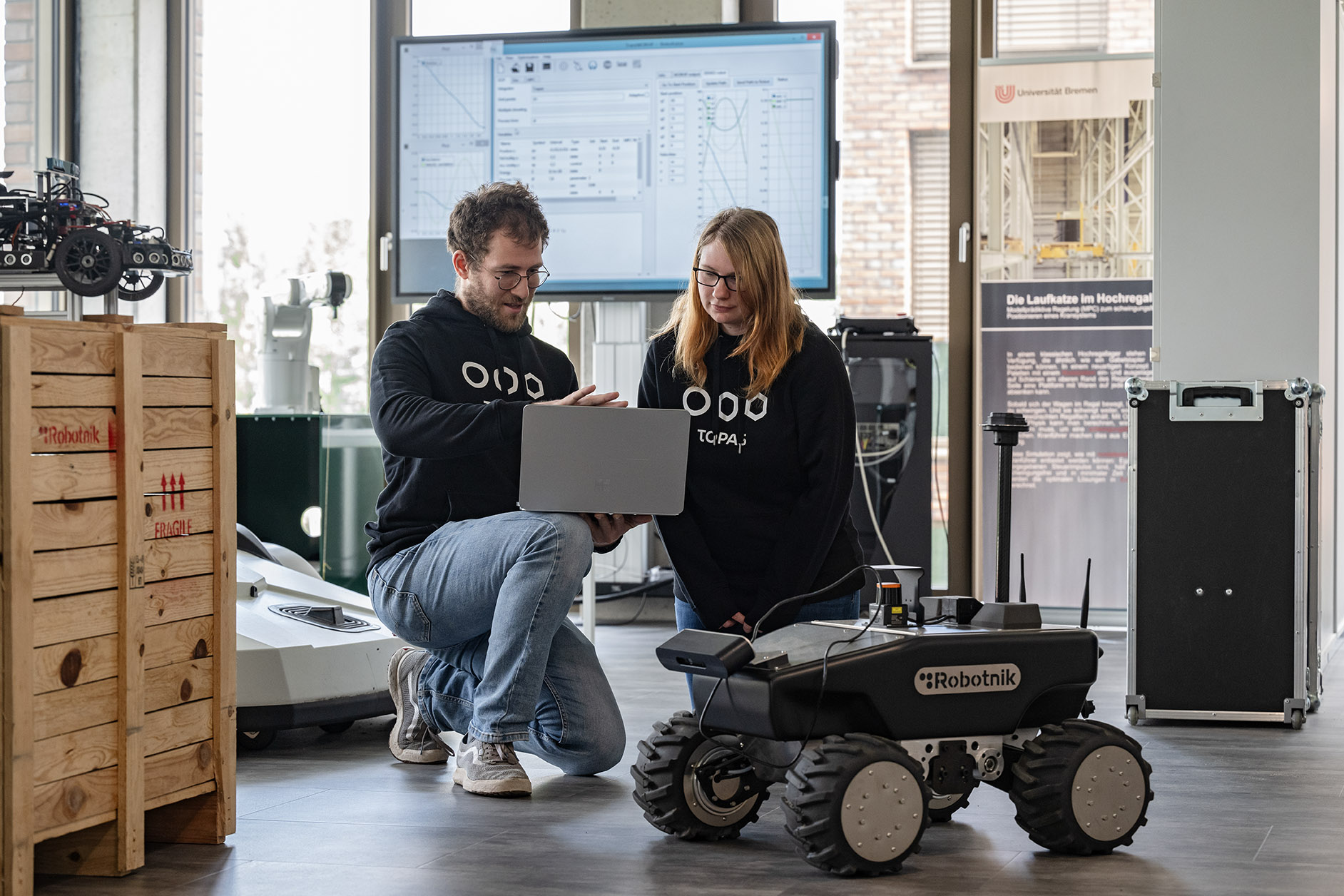
One of Bremen’s particular strengths is the close connection between AI and industrial mathematics. Many AI applications are based on mathematical models and algorithms. This holds considerable innovation potential, especially for companies: Industrial mathematics helps model processes, optimize workflows, make autonomous systems safer, and improve data-driven decision-making. With stakeholders such as TOPAS Industrial Mathematics, Bremen possesses additional practical expertise in bridging the gap between mathematical research and business applications.
With #MOIN – Model Region for Industrial Mathematics, this transfer is being actively promoted. The initiative was launched by the Senator for Economic Affairs, Ports, and Transformation in collaboration with the University of Bremen and BIS Bremerhaven Economic Development. The goal is to further integrate applied mathematics into business and society and to build bridges between scientific development and economic applications.


At the same time, Bremen is home to leading research institutions in the field of AI, including the Technology Center for Computer Science and Information Technology (TZI) at the University of Bremen, the German Research Center for Artificial Intelligence (DFKI), as well as other specialized organizations in the state.
The BREMEN Transfer Center for Artificial Intelligence. AI and #MOIN – Model Region for Industrial Mathematics, both of which operate out of the Digital Hub Industry. They pool expertise within the state, promote exchange between academia, industry, and the public, and facilitate access for companies and professionals to the latest developments and application potential in AI and industrial mathematics.

Transfer Center for Artificial Intelligence Bremen.AI
The BREMEN.AI Artificial Intelligence Transfer Center is the central hub for AI transfer in the state of Bremen. The Transfer Center connects companies with scientific expertise, highlights potential applications of AI, and helps bring new technologies into practice more quickly. Its focus is on providing guidance, fostering networking, and facilitating access to relevant expertise within the regional AI ecosystem.
Further information
#MOIN – Model Region for Industrial Mathematics
#MOIN – Model Region for Industrial Mathematics promotes the application of modern mathematics in business and society. The T!Raum initiative demonstrates how mathematical methods can help solve complex challenges—such as optimization, modeling, or data-driven decision-making. In this way, #MOIN makes the potential of industrial mathematics more visible and accessible for concrete applications in the state of Bremen.
Further information

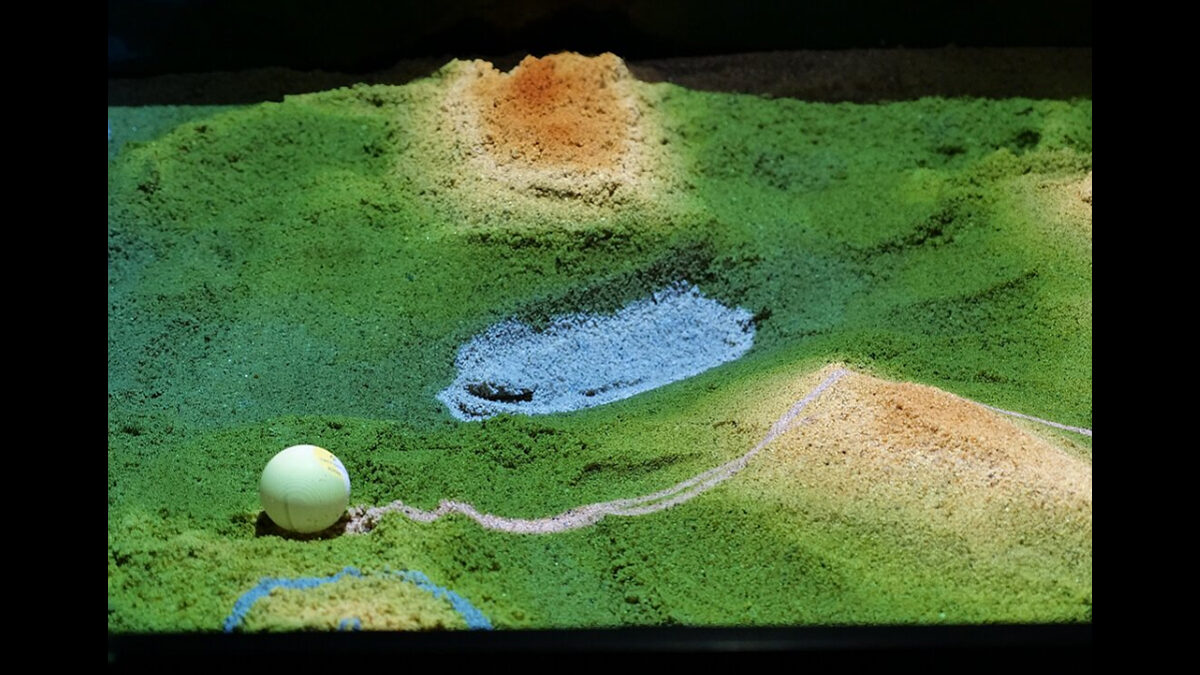
¹ A projected elevation map captures the landscape modeled in sand, while the WHORP optimization software uses mathematical algorithms to determine the optimal path between the starting point and the destination.
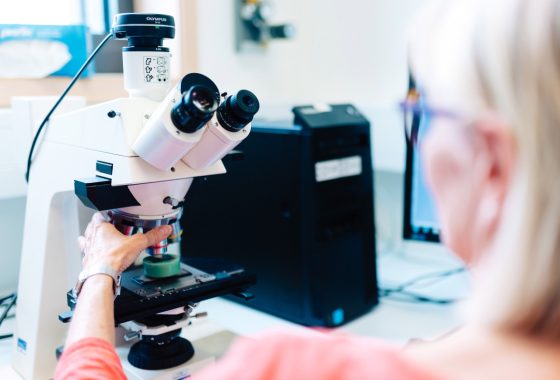
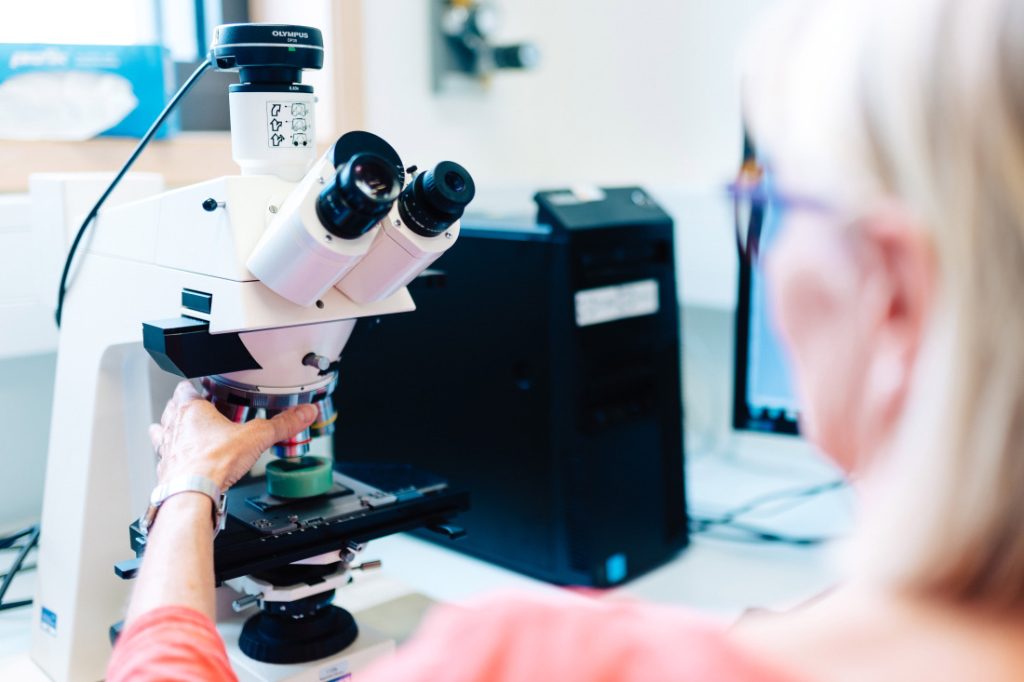
² In MuKIDERM project, skin tissue samples are digitally analyzed, and abnormal areas are identified and measured.